
Fewer emissions
Fewer greenhouse gases than fossil fuels.
Hemp can feed more than food and fiber chains. Its oil can become biofuel and its leftover biomass can become biochar.
Biofuel
Biofuel is made from living organisms and is usually blended with regular fuel. Because it comes from organic matter, it absorbs carbon dioxide while the plant grows and releases it again when burned, so it does not add to the build-up of CO2. The project is looking at biofuel produced from industrial hemp oil as a renewable, biodegradable option that can run in standard diesel engines, pure or blended.
How it is made
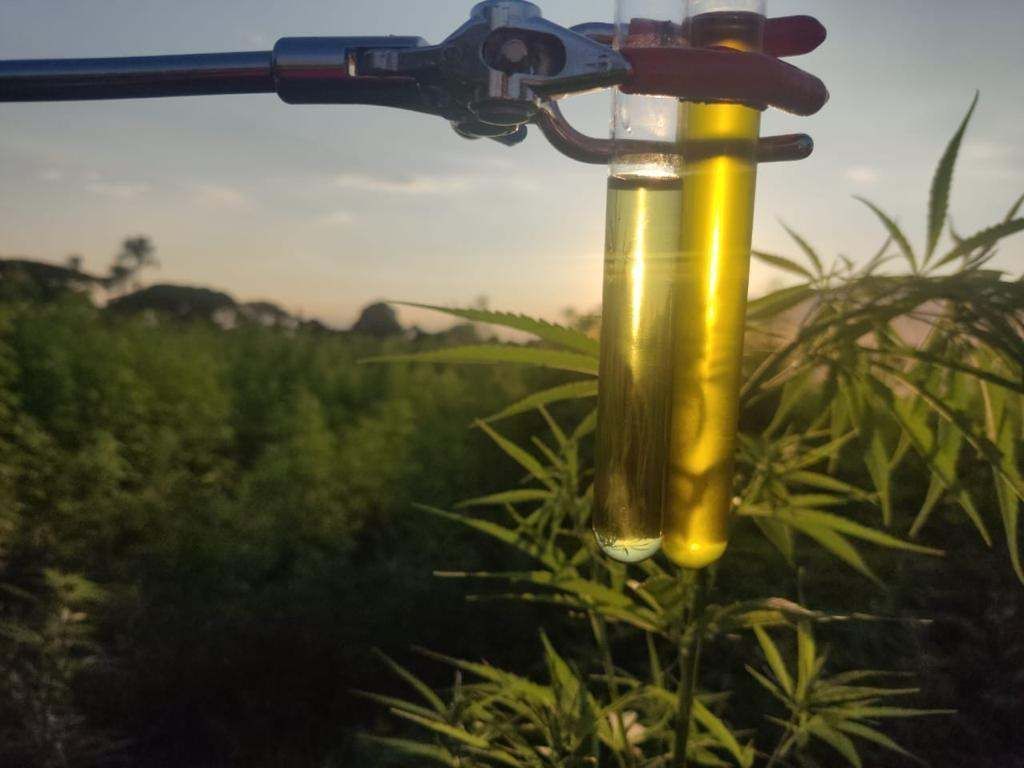
Oil is pressed from the hemp seeds. It is the raw material.
Methanol and potassium hydroxide (KOH) turn the oil into methyl esters and glycerin.
The esters and glycerin separate by density. The glycerin settles and is removed.
The esters are washed to remove traces of methanol, catalyst and impurities.
A renewable fuel for standard diesel engines.
Why it matters
Fewer greenhouse gases than fossil fuels.
Hemp grows fast and needs less water and fertilizer.
Less toxic and more biodegradable than petroleum diesel in a spill.
Glycerin and seed residue can serve other industries.
Hemp fields can give habitat to a range of fauna and flora.
What remains can become biochar, and methanol for biofuel.
Biochar
A comparison of hemp biochar with pine charcoal, eucalyptus charcoal and mineral coal.
| Measure | Hemp biochar | Pine charcoal | Eucalyptus charcoal | Mineral coal |
|---|---|---|---|---|
| Higher heating value (BTU/lb) | 12,712 | 8,500 | 9,500 | 14,000 |
| Fixed carbon (% by weight) | 72.5 | 80 | 85 | 62.8 |
| Ash (% by weight) | 11.04 | 5 | 3 | 17 |
| Sulfur (% by weight) | 0.11 | 0.5 | 0.5 | 2.2 |
| SO2 emitted (kg per ton burned) | 2 | 9 | 9 | 40 |
| CO2 emitted (tons per ton burned) | 2.18 | 2.9 | 3.1 | 2.3 |
Figures from the project's own comparison and laboratory results. The hemp biochar heating value is on a dry basis (as received it is 9,290 BTU/lb). Mineral coal has a higher heating value, but it is a non-renewable fossil fuel. The project concludes that hemp biochar is the better option for sustainability.
Laboratory results
Thermal and elemental results for hemp biochar. Test conditions: 24.4 °C preparation area, 20.0 °C test area, 0.8 bar.
| Parameter (method) | As received | Dry basis |
|---|---|---|
| Volatile matter, % (ASTM D7582-15) | 12.01 | 16.44 |
| Ash, % (ASTM D7582-15) | 8.06 | 11.04 |
| Fixed carbon, % (ASTM D3172-13) | 53.00 | 72.53 |
| Higher heating value, kcal/kg (ASTM D5865) | 5,151.2 | 7,062.2 |
| Higher heating value, BTU/lb (ASTM D5865) | 9,290 | 12,712 |
| Lower heating value, BTU/lb | 9,128 | 12,480 |
| Sulfur, % (ASTM D4239-18) | 0.08 | 0.11 |
| Carbon, % (ASTM D5373-21) | 58.82 | 80.49 |
| Hydrogen, % (ASTM D5373-21) | 1.71 | 2.34 |
| Nitrogen, % (ASTM D5373-21) | 0.58 | 0.79 |
| Oxygen, % (ASTM D3176-15) | 3.91 | 5.24 |
Fuel properties
These depend on the oil's composition, which varies with growing and processing conditions.
A balanced ratio of fatty acids that can support good performance in diesel engines.
An indicator of combustion quality. Hemp biofuel has a cetane number suitable for diesel engines.
May be lower than other biofuels because of the high polyunsaturated content, which suitable antioxidants can address.
A low solidification point, so it stays fluid in cold conditions.
Similar to other biofuels and suitable for diesel engines.
Economics
They vary by region and scale, but can be competitive once environmental benefits and by-product revenue are counted.
The biofuel market is growing with demand for renewable energy, and the many uses of hemp add value to growing it.
Many governments promote biofuels, which can improve economic viability.
By-products from processing can add revenue and improve profitability.
Aviation and engine fuels
The project's varieties produce seed oil rich in polyunsaturated fatty acids. Through the HEFA process (hydrotreated esters and fatty acids), the project aims to turn that oil into distillable hydrocarbons for biokerosene, biodiesel and biogasoline, with better resistance to low temperatures. The main focus is aviation biokerosene (SAF).
Fuels
The main focus: a fuel designed to keep flowing at very low temperatures, for aviation.
A cleaner alternative to fossil diesel for diesel engines.
For gasoline engines, from a sustainable production route.
A volatile by-product used for energy or other steps inside the refinery.
The HEFA route
Cold pressing and refining to prepare the oil.
Saturates double bonds and removes sulfur and nitrogen.
Reshapes molecules for fluidity and stability in the cold.
Cuts the oxygen content, leaving simpler hydrocarbons and water.
Separates the mix into fractions for each fuel.
Removes traces of other hydrocarbons and impurities.
Adjusts chain length to each fuel's specification.
Energy Communities
Energy Communities is a project to bring sustainable electricity to underserved rural areas, using industrial hemp as biomass. A specialized plant would turn the biomass into high-pressure steam that drives a turbine and a generator. The power would go to local communities or be sold to the national grid, and the model is meant to be replicable in other regions. The project also includes training for local people in hemp growing, plant maintenance and environmental management.
The plant design
From the field to the community, in six stages:
By the numbers
Planned figures:
FAQ
The project aims to turn hemp seed oil into biofuel, through transesterification for biodiesel and through the HEFA process for biokerosene, biodiesel and biogasoline.
HEFA stands for hydrotreated esters and fatty acids. It converts vegetable oil into distillable hydrocarbons. The project's main focus is aviation biokerosene (SAF) that keeps flowing at very low temperatures.
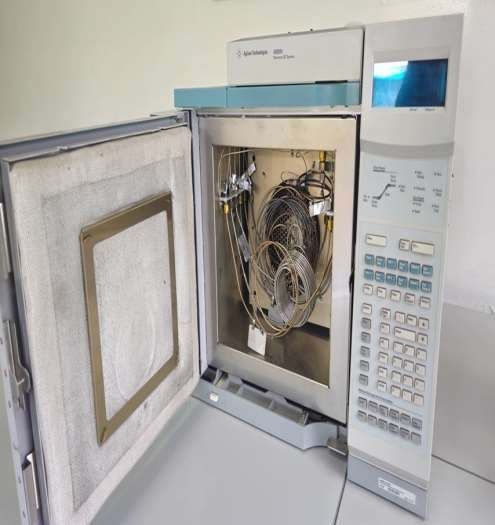
The project plans to test it in air force turbines and to run chromatographic, flash point, density and emissions tests against international standards.
It is a project to bring sustainable electricity to underserved rural areas of LATAM using hemp biomass. A plant of up to 2 MW would be fed by about 80 hectares of hemp, with local training and jobs.
On the project's own figures, hemp biochar has a higher heating value of 12,712 BTU/lb on a dry basis, against 8,500 for pine, 9,500 for eucalyptus and 14,000 for mineral coal. Its sulfur content is 0.11%, against 0.5%, 0.5% and 2.2%.